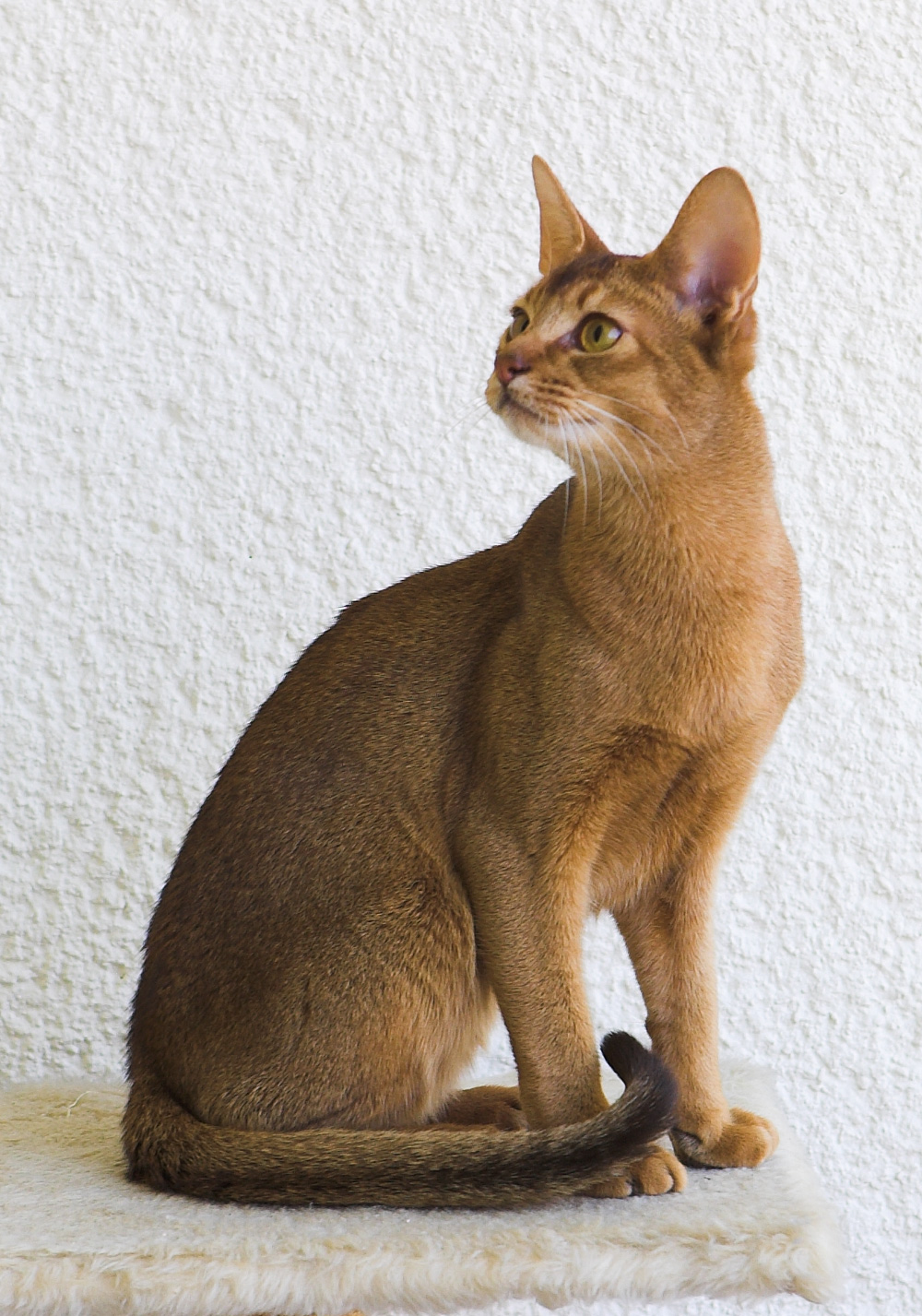

Abyssinian vs Norwegian Forest Cat
Abyssinian
Cat- Size
- Medium
- Weight
- 3-5 kg
- Lifespan
- 12-15 years
- Origin
- Ethiopia/Egypt
- Coat
- Short ticked coat
- Size
- Large
- Weight
- 4-9 kg
- Lifespan
- 12-16 years
- Origin
- Norway
- Coat
- Long water-resistant double coat
Trait Comparison
Bars extend from center. The longer the bar, the higher the score. Winner is highlighted.
Editorial Insights
Written by breed specialists
Abyssinian and Norwegian Forest Cat breeds represent opposite climate-driven evolutionary paths: Abyssinians showcase warm African heritage through fine-boned frames and ticked coats, while Norwegian Forest Cats display cold-climate adaptation through substantial size, long weatherproof coats, and sturdy builds. Both are intelligent and active but embody different energy expressions suited to different living situations.
Key Difference Most People Miss
Physical infrastructure needs differ: Abyssinians require activity-focused enrichment (toys, play, climbing games), while Norwegian Forest Cats require space and access to climbing structures reflecting their natural tree-dwelling heritage. Both are active but express activity differently—Abyssinians through intense engagement, Norwegian Forest Cats through independent exploration.
History Explains the Difference
Abyssinians descended from imported North African cats in 1800s Britain, their fine ticked coats reflecting warm-climate ancestry. Norwegian Forest Cats evolved in Scandinavian forests, developing substantial frames and long water-resistant coats through centuries of cold-climate survival before being formalized as a breed in the 1930s.
Which Breed Fits Your Lifestyle?
Abyssinians thrive with active owners in varied climates, needing interactive play and climbing structures indoors or in secure outdoor areas. Norwegian Forest Cats suit outdoor-inclined families with space and tolerance for long-haired shedding, enjoying climbing and exploration in natural settings while equally content indoors provided environmental complexity exists. Abyssinians can frustrate apartment dwellers without commitment to enrichment; Norwegian Forest Cats adapt to apartments if owners manage grooming and shedding expectations. Both suit active families, though Abyssinians' intensity demands more frequent interactive play while Norwegian Forest Cats' energy manifests through independent exploration. Warm-climate owners should carefully consider Norwegian Forest Cats' thermal comfort needs.
Expert Analysis: Abyssinian vs Norwegian Forest Cat
Data-driven comparison based on trait profiles, health data, and breed characteristics.
When comparing the Abyssinian and Norwegian Forest Cat, prospective pet owners will find two cat breeds with distinct personalities and care requirements. Abyssinian is significantly more energetic than Norwegian Forest Cat, requiring vigorous daily exercise such as long walks, runs, or active play sessions. In contrast, Norwegian Forest Cat is content with a moderate exercise routine, making it a better fit for less active households. For families with children, Norwegian Forest Cat has the edge with a kid-friendliness score of 5/5 compared to Abyssinian's 4/5. Norwegian Forest Cats tend to be more patient and gentle around young ones. Shedding is a major differentiator here: Norwegian Forest Cat sheds heavily (4/5), so you will need lint rollers and regular vacuuming. Abyssinian sheds much less (2/5), making it a better option for those who prefer a cleaner home or have mild allergies. Grooming demands differ significantly -- Norwegian Forest Cat requires moderate grooming attention, whereas Abyssinian is relatively low-maintenance in the grooming department (1/5). There is a substantial size difference between these two breeds. The Norwegian Forest Cat is a large breed (4-9 kg), while the Abyssinian is a medium breed (3-5 kg). This impacts food costs, space requirements, and even travel convenience. Health-wise, Abyssinians are predisposed to conditions like Renal Amyloidosis and PRA, while Norwegian Forest Cats may face Hypertrophic Cardiomyopathy and Hip Dysplasia. Prospective owners should budget for regular veterinary check-ups and consider pet insurance for either breed. Ultimately, the best choice between Abyssinian and Norwegian Forest Cat depends on your lifestyle, living situation, and personal preferences. Both breeds can make wonderful companions when matched with the right owner.
Abyssinian Quick Answers
Is Abyssinian good with kids?
Yes, Abyssinian scores 4/5 for kid-friendliness, making it an excellent family pet.
Does Abyssinian shed a lot?
No, Abyssinian is a low shedder (2/5), great for cleaner homes.
How long does a Abyssinian live?
Abyssinians typically live 12-15 years with proper care, diet, and regular vet check-ups.
Is Abyssinian easy to train?
Abyssinian has a trainability score of 3/5. Consistent training works well.
Norwegian Forest Cat Quick Answers
Is Norwegian Forest Cat good with kids?
Yes, Norwegian Forest Cat scores 5/5 for kid-friendliness, making it an excellent family pet.
Does Norwegian Forest Cat shed a lot?
Yes, Norwegian Forest Cat is a heavy shedder (4/5). Expect regular brushing and vacuuming.
How long does a Norwegian Forest Cat live?
Norwegian Forest Cats typically live 12-16 years with proper care, diet, and regular vet check-ups.
Is Norwegian Forest Cat easy to train?
Norwegian Forest Cat has a trainability score of 3/5. Consistent training works well.
Choose Abyssinian if...
- You want an active, high-energy companion
- You want lower grooming maintenance
- You prefer less shedding
Choose Norwegian Forest Cat if...
- You prefer a calmer, lower-energy pet
- You have young children at home
Health Comparison
Common health concerns for each breed.
Abyssinian
- Renal Amyloidosis
- PRA
- Gingivitis
Norwegian Forest Cat
- Hypertrophic Cardiomyopathy
- Hip Dysplasia
- Glycogen Storage Disease IV