
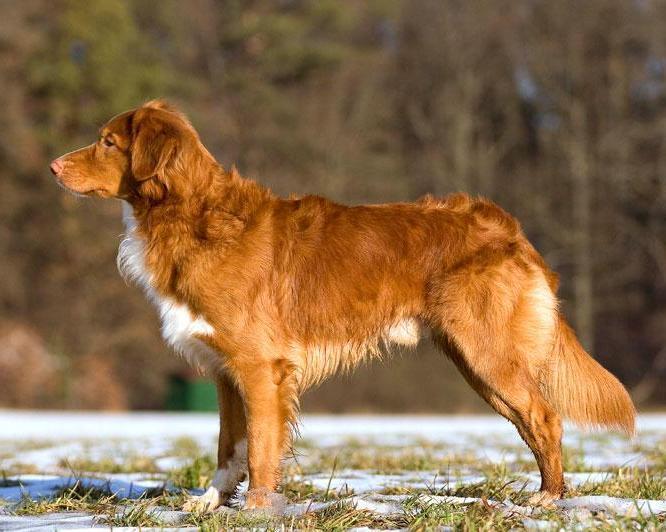
Labrador Retriever vs Nova Scotia Duck Tolling Retriever
- Size
- Large
- Weight
- 25-36 kg
- Height
- 55-62 cm
- Lifespan
- 11-13 years
- Origin
- Canada
- Coat
- Short double coat
- Size
- Medium
- Weight
- 17-23 kg
- Height
- 43-53 cm
- Lifespan
- 12-14 years
- Origin
- Canada
- Coat
- Medium-length double coat
Trait Comparison
Bars extend from center. The longer the bar, the higher the score. Winner is highlighted.
Editorial Insights
Written by breed specialists
The Labrador Retriever and Nova Scotia Duck Tolling Retriever comparison addresses a critical decision point for prospective owners who recognize both breeds' appeal but need to understand their substantial differences. Many owners overlook how specialization—whether for hunting, herding, companionship, or working roles—shapes daily behavior, exercise requirements, and household compatibility in ways that popularity rankings and size categories cannot adequately explain. Choosing correctly prevents costly adoption regrets within the first year.
Key Difference Most People Miss
The most consequential overlooked factor is energy sustainment across the dog's entire lifespan. One breed maintains intense drive relentlessly throughout its entire existence, while the other may settle somewhat with maturity. Under-exercising high-energy dogs creates genuinely dangerous behavioral problems and destructive habits that devastate homes and human relationships.
History Explains the Difference
The Labrador Retriever was developed in Canada through selective breeding for specific working purposes—hunting, retrieving, herding, or companionship—that directly shaped their modern temperament, drive levels, and behavioral traits fundamentally. The Nova Scotia Duck Tolling Retriever originated in Canada with heritage that continues influencing their instinctive behaviors and household compatibility patterns today. These divergent origins explain why their instincts sometimes conflict with modern household expectations.
Which Breed Fits Your Lifestyle?
Both breeds have similar apartment suitability in terms of size, though environmental factors like noise tolerance, neighbor considerations, and individual temperament variations may influence the practical choice meaningfully. Both require consistent daily activity and mental engagement for behavioral health, though the types and intensity of exercise they most enjoy may differ considerably based on their breeding heritage and instinctive drive patterns. Both respond well to training, though they may require different motivational approaches and handler confidence levels based on individual personality development and breed-specific instinctive drives. Prospective families should honestly assess their activity levels, living situation constraints, and training experience before committing long-term to either breed.
Expert Analysis: Labrador Retriever vs Nova Scotia Duck Tolling Retriever
Data-driven comparison based on trait profiles, health data, and breed characteristics.
When comparing the Labrador Retriever and Nova Scotia Duck Tolling Retriever, prospective pet owners will find two dog breeds with distinct personalities and care requirements. Both breeds score equally well with children (5/5), making either an excellent choice for family households. There is a substantial size difference between these two breeds. The Labrador Retriever is a large breed (25-36 kg), while the Nova Scotia Duck Tolling Retriever is a medium breed (17-23 kg). This impacts food costs, space requirements, and even travel convenience. Health-wise, Labrador Retrievers are predisposed to conditions like Hip Dysplasia and Obesity, while Nova Scotia Duck Tolling Retrievers may face Hip Dysplasia and Eye Conditions. Prospective owners should budget for regular veterinary check-ups and consider pet insurance for either breed. Ultimately, the best choice between Labrador Retriever and Nova Scotia Duck Tolling Retriever depends on your lifestyle, living situation, and personal preferences. Both breeds can make wonderful companions when matched with the right owner.
Labrador Retriever Quick Answers
Is Labrador Retriever good with kids?
Yes, Labrador Retriever scores 5/5 for kid-friendliness, making it an excellent family pet.
Does Labrador Retriever shed a lot?
Yes, Labrador Retriever is a heavy shedder (4/5). Expect regular brushing and vacuuming.
How long does a Labrador Retriever live?
Labrador Retrievers typically live 11-13 years with proper care, diet, and regular vet check-ups.
Is Labrador Retriever easy to train?
Yes, Labrador Retriever is highly trainable (5/5) and responds well to positive reinforcement.
Nova Scotia Duck Tolling Retriever Quick Answers
Is Nova Scotia Duck Tolling Retriever good with kids?
Yes, Nova Scotia Duck Tolling Retriever scores 5/5 for kid-friendliness, making it an excellent family pet.
Does Nova Scotia Duck Tolling Retriever shed a lot?
Nova Scotia Duck Tolling Retriever has moderate shedding (3/5). Regular brushing helps.
How long does a Nova Scotia Duck Tolling Retriever live?
Nova Scotia Duck Tolling Retrievers typically live 12-14 years with proper care, diet, and regular vet check-ups.
Is Nova Scotia Duck Tolling Retriever easy to train?
Yes, Nova Scotia Duck Tolling Retriever is highly trainable (5/5) and responds well to positive reinforcement.
Choose Labrador Retriever if...
- Both breeds are equally matched for your needs
Choose Nova Scotia Duck Tolling Retriever if...
- You prefer less shedding
Health Comparison
Common health concerns for each breed. Shared issues are highlighted.
Labrador Retriever
- Hip Dysplasia Shared
- Obesity
- Elbow Dysplasia
- Eye Conditions Shared
Nova Scotia Duck Tolling Retriever
- Hip Dysplasia Shared
- Eye Conditions Shared
- Addison's Disease
- Autoimmune Disorders