
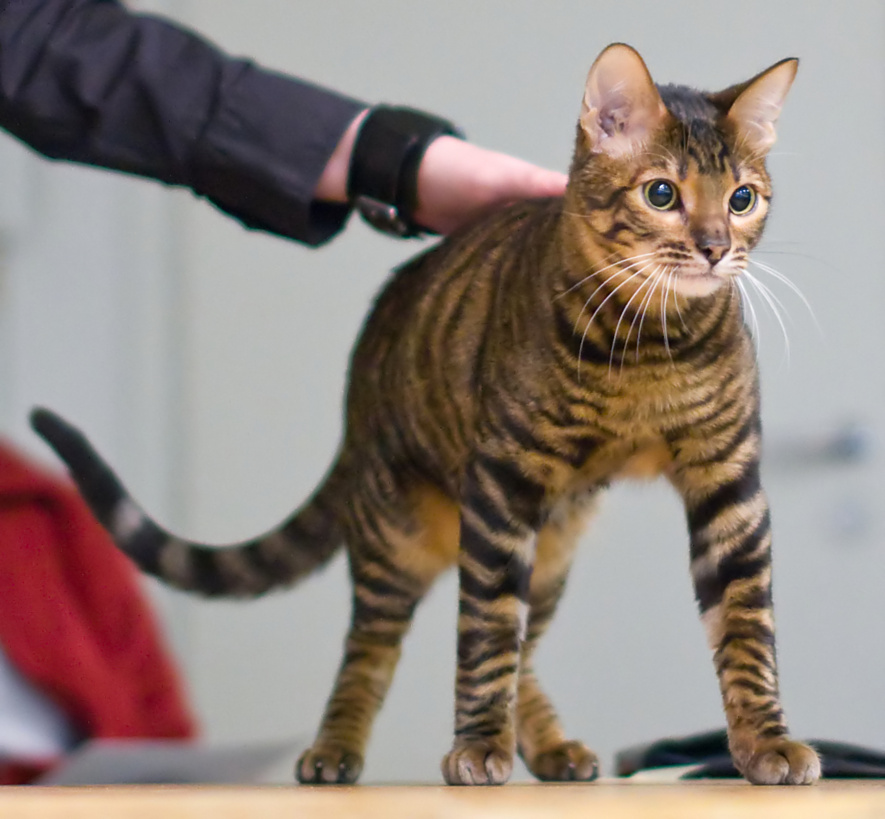
Bengal vs Toyger
Bengal
Cat- Size
- Medium-Large
- Weight
- 4-7 kg
- Lifespan
- 12-16 years
- Origin
- United States
- Coat
- Short spotted/marbled
Toyger
Cat- Size
- Medium
- Weight
- 3-7 kg
- Lifespan
- 12-15 years
- Origin
- United States
- Coat
- Short striped coat
Trait Comparison
Bars extend from center. The longer the bar, the higher the score. Winner is highlighted.
Editorial Insights
Written by breed specialists
Bengal and Toyger cats both aim to bring the wild look into the living room, but through different wild cat inspirations. Bengals mimic the Asian Leopard Cat with spots, while Toygers recreate the tiger's striped pattern. Both are designer breeds for exotic cat enthusiasts.
Key Difference Most People Miss
The most significant difference is energy and activity level. Bengals are high-energy athletes that need extensive physical and mental stimulation. Toygers, despite their wild appearance, were bred with a calmer temperament and are more manageable as typical house pets.
History Explains the Difference
Bengals were created starting in the 1960s using Asian Leopard Cat crosses. Toygers were developed by Judy Sugden starting in the 1980s using domestic cats selectively bred for tiger-like striped markings, without any wild cat hybridization.
Which Breed Fits Your Lifestyle?
Bengals are more readily available and have a wider range of breeders to choose from. Toygers are rarer and more expensive but tend to have calmer temperaments than Bengals, making them better for families who want the exotic look without the extreme energy. Bengals are more athletic and need more enrichment, while Toygers are more content with standard cat activities.
Expert Analysis: Bengal vs Toyger
Data-driven comparison based on trait profiles, health data, and breed characteristics.
When comparing the Bengal and Toyger, prospective pet owners will find two cat breeds with distinct personalities and care requirements. Bengal has a slightly higher energy level (5/5) compared to Toyger (4/5), so expect to dedicate a bit more time to exercise and play with the Bengal. For families with children, Toyger has the edge with a kid-friendliness score of 5/5 compared to Bengal's 4/5. Toygers tend to be more patient and gentle around young ones. If you live in an apartment, Toyger is the clear winner with an apartment-friendliness rating of 4/5, while Bengal scores only 2/5 and would benefit from more living space. Health-wise, Bengals are predisposed to conditions like Hypertrophic Cardiomyopathy and PRA, while Toygers may face Heart Murmurs and Generally healthy. Prospective owners should budget for regular veterinary check-ups and consider pet insurance for either breed. Ultimately, the best choice between Bengal and Toyger depends on your lifestyle, living situation, and personal preferences. Both breeds can make wonderful companions when matched with the right owner.
Bengal Quick Answers
Is Bengal good with kids?
Yes, Bengal scores 4/5 for kid-friendliness, making it an excellent family pet.
Does Bengal shed a lot?
No, Bengal is a low shedder (2/5), great for cleaner homes.
How long does a Bengal live?
Bengals typically live 12-16 years with proper care, diet, and regular vet check-ups.
Is Bengal easy to train?
Bengal has a trainability score of 3/5. Consistent training works well.
Toyger Quick Answers
Is Toyger good with kids?
Yes, Toyger scores 5/5 for kid-friendliness, making it an excellent family pet.
Does Toyger shed a lot?
No, Toyger is a low shedder (2/5), great for cleaner homes.
How long does a Toyger live?
Toygers typically live 12-15 years with proper care, diet, and regular vet check-ups.
Is Toyger easy to train?
Toyger has a trainability score of 3/5. Consistent training works well.
Choose Toyger if...
- You prefer a calmer, lower-energy pet
- You have young children at home
- You live in an apartment or smaller space
Health Comparison
Common health concerns for each breed.
Bengal
- Hypertrophic Cardiomyopathy
- PRA
- Patellar Luxation
- Flat-chested Kitten Syndrome
Toyger
- Heart Murmurs
- Generally healthy