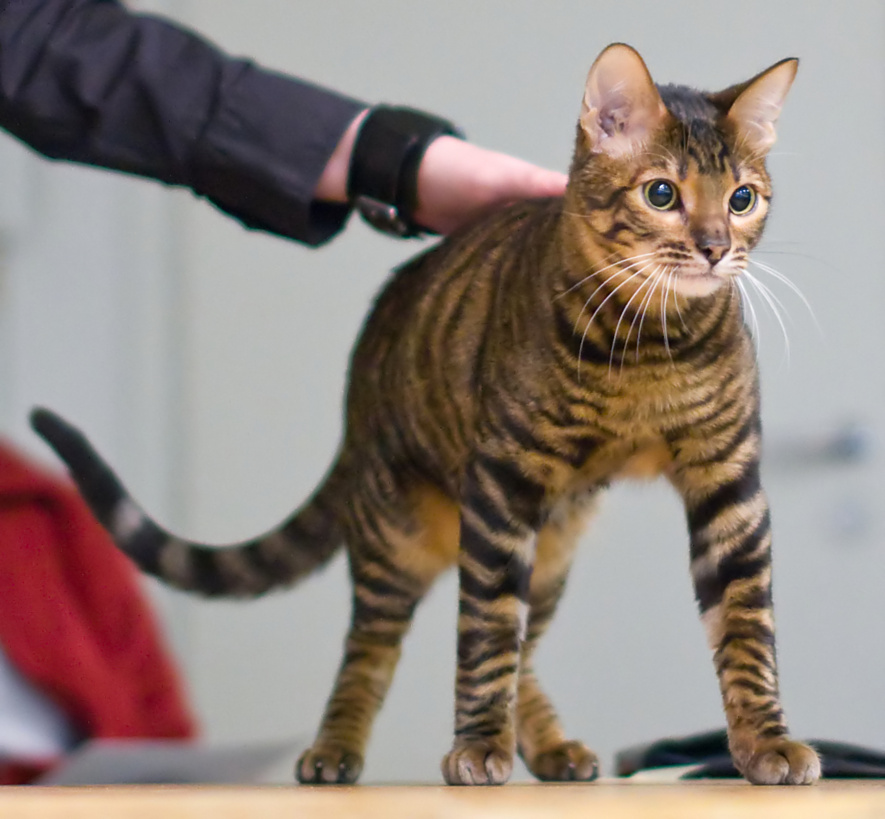
Toyger vs Munchkin
Toyger
Cat- Size
- Medium
- Weight
- 3-7 kg
- Lifespan
- 12-15 years
- Origin
- United States
- Coat
- Short striped coat
Munchkin
Cat- Size
- Small-Medium
- Weight
- 3-4 kg
- Lifespan
- 12-15 years
- Origin
- United States
- Coat
- Short or long coat
Trait Comparison
Bars extend from center. The longer the bar, the higher the score. Winner is highlighted.
Editorial Insights
Written by breed specialists
The Toyger versus Munchkin comparison highlights a fundamental lifestyle choice for prospective cat owners seeking the right personality match. Both breeds maintain moderately comparable energy levels and activity requirements overall. Understanding their distinct temperaments, specific health predispositions, and comprehensive care requirements ensures proper matching between breed characteristics and individual household environments.
Key Difference Most People Miss
Size presents a striking distinction: Toyger registers as Medium, while Munchkin is Small-Medium. Vocalization patterns and communication styles between these breeds are relatively comparable.
History Explains the Difference
Toyger originated in United States, carefully developed to be designer breed resembling a miniature tiger. Munchkin emerged from United States, intentionally bred as controversial short-legged cat. These distinct geographical origins and selective breeding histories directly shaped their contemporary behavioral patterns, physical attributes, and suitability for diverse household environments.
Which Breed Fits Your Lifestyle?
Toyger adapts well to apartment living and smaller spaces due to their naturally adaptable temperament and modest space requirements. Prospective owners should anticipate potential heart murmurs, generally healthy with Toyger, contrasted with lordosis, pectus excavatum in Munchkin. Toyger requires minimal grooming maintenance compared to Munchkin, which demands more regular and thorough coat care. Families with young children may prefer Toyger, which typically demonstrates greater patience and gentleness. Both breeds thrive with consistent socialization, interactive play sessions, and enrichment activities.
Expert Analysis: Toyger vs Munchkin
Data-driven comparison based on trait profiles, health data, and breed characteristics.
When comparing the Toyger and Munchkin, prospective pet owners will find two cat breeds with distinct personalities and care requirements. For families with children, Toyger has the edge with a kid-friendliness score of 5/5 compared to Munchkin's 4/5. Toygers tend to be more patient and gentle around young ones. Health-wise, Toygers are predisposed to conditions like Heart Murmurs and Generally healthy, while Munchkins may face Lordosis and Pectus Excavatum. Prospective owners should budget for regular veterinary check-ups and consider pet insurance for either breed. Ultimately, the best choice between Toyger and Munchkin depends on your lifestyle, living situation, and personal preferences. Both breeds can make wonderful companions when matched with the right owner.
Toyger Quick Answers
Is Toyger good with kids?
Yes, Toyger scores 5/5 for kid-friendliness, making it an excellent family pet.
Does Toyger shed a lot?
No, Toyger is a low shedder (2/5), great for cleaner homes.
How long does a Toyger live?
Toygers typically live 12-15 years with proper care, diet, and regular vet check-ups.
Is Toyger easy to train?
Toyger has a trainability score of 3/5. Consistent training works well.
Munchkin Quick Answers
Is Munchkin good with kids?
Yes, Munchkin scores 4/5 for kid-friendliness, making it an excellent family pet.
Does Munchkin shed a lot?
No, Munchkin is a low shedder (2/5), great for cleaner homes.
How long does a Munchkin live?
Munchkins typically live 12-15 years with proper care, diet, and regular vet check-ups.
Is Munchkin easy to train?
Munchkin has a trainability score of 3/5. Consistent training works well.
Choose Toyger if...
- You have young children at home
- You want lower grooming maintenance
Health Comparison
Common health concerns for each breed.
Toyger
- Heart Murmurs
- Generally healthy
Munchkin
- Lordosis
- Pectus Excavatum
- Osteoarthritis